
How Developers Built Secure Video Into Their Platforms Without Building DRM From Scratch
From LMS startups to SaaS onboarding platforms and white-label learning products, development teams used VdoCipher to reduce engineering effort, launch faster, and deliver secure video at enterprise scale.
For developers, video often looks simple until the product needs to scale.
A basic video player may work for a demo. But once a platform needs paid courses, enterprise onboarding, private training libraries, white-label clients, mobile playback, DRM, access control, analytics, and reliable delivery, the engineering effort grows quickly.
"Most small product teams do not want to become video infrastructure companies. They want secure playback, clean APIs, stable SDKs, and documentation that helps them ship."
That is where VdoCipher helped these teams move from months of uncertainty to production-ready secure video in weeks.
The challenge: secure video was becoming an engineering bottleneck
A small LMS startup in Poland was building a white-label learning platform for European corporate trainers. The team had only three developers, and their roadmap already included assessments, learner dashboards, admin controls, customer branding, certificates, and enterprise workflows.
Then secure video became the blocker.
The lead developer spent weeks trying to implement Apple FairPlay and Google Widevine DRM independently. The documentation was fragmented, mobile SDK behavior was inconsistent, and older Android devices created unexpected playback issues.
The team initially estimated that a reliable secure video module could take close to three months to build and test. For a startup preparing its MVP, that delay could have slowed customer demos, investor conversations, and early revenue.
A SaaS platform in Germany faced a different version of the same problem. The product needed video-based onboarding tutorials inside its application for enterprise clients. The team wanted videos to feel native to the product, not like a generic third-party embed.
As the company moved from one pilot customer to larger enterprise accounts, video became part of the onboarding experience. If playback failed, loading was slow, or access was not controlled properly, the support team would feel it immediately.
In Indonesia, two developers were building a white-label learning platform for corporate clients. Every new customer required a separate training environment, branded experience, and secure video delivery. As the platform moved from early deployments toward dozens of enterprise rollouts, managing video infrastructure internally became unrealistic.
Across all three teams, the issue was not just playing videos. It was building secure, scalable, enterprise-grade video into a product without losing months of engineering time.
The tools: APIs, DRM modules, SDKs, analytics, permissions, and developer support
The teams integrated VdoCipher to make secure video part of their platforms without building the full stack themselves.
- ✓DRM and security modules gave developers access to Google Widevine and Apple FairPlay-based protection for premium and enterprise video content. This helped teams avoid months of DRM research, vendor complexity, and device-level troubleshooting.
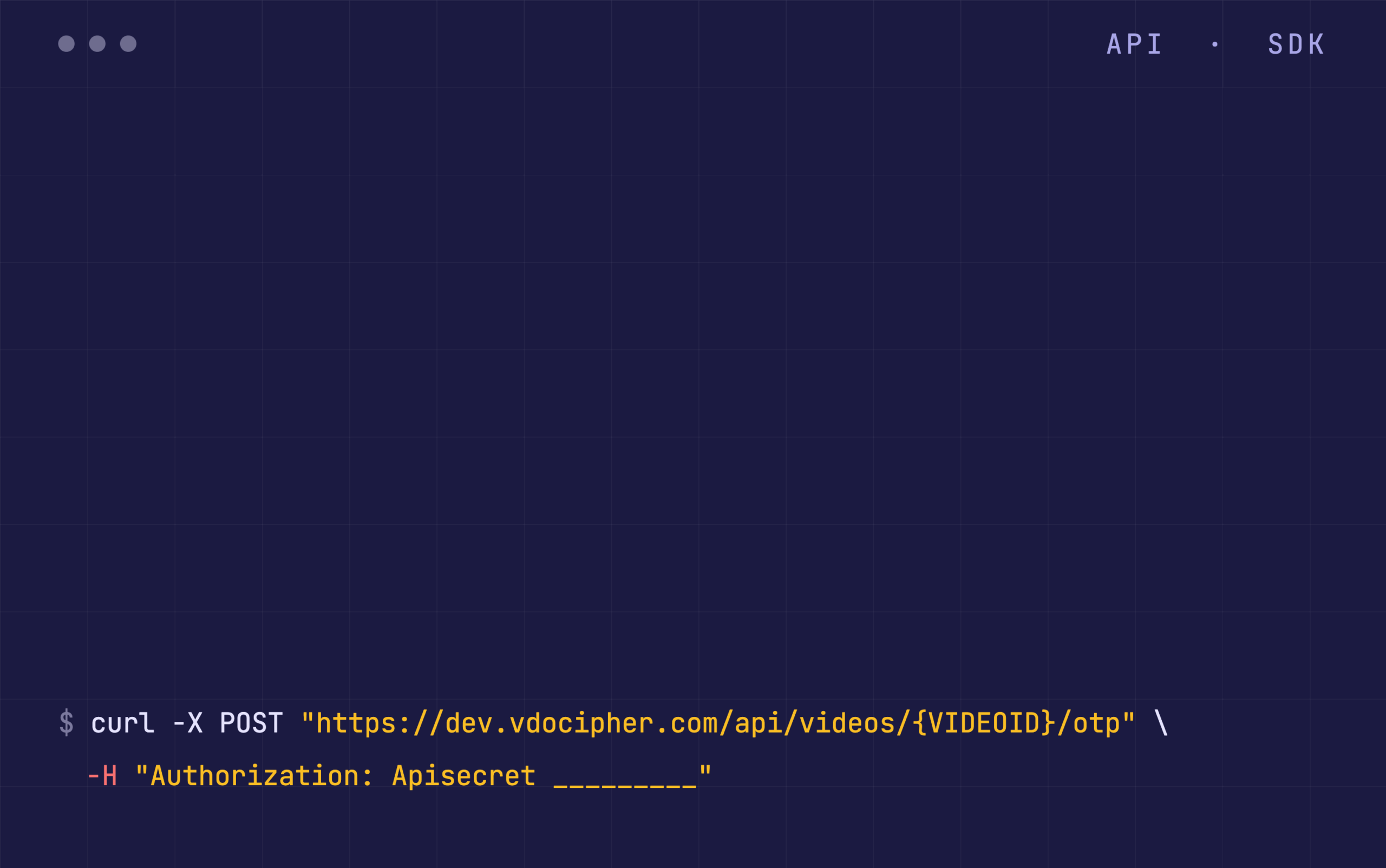
- ✓Developer-friendly APIs allowed teams to upload, manage, secure, and deliver videos programmatically. Developers could connect VdoCipher with LMS dashboards, SaaS products, admin panels, user databases, CRMs, and customer-specific workflows.
- ✓Customizable video player SDKs helped teams create branded playback experiences inside their own platforms. This mattered for white-label products where the video experience needed to feel like part of the customer's own system.
- ✓API roles and permissions helped teams manage internal users, enterprise clients, admin access, and customer-specific video workflows with better control.
- ✓Security analytics and hacker identification gave teams visibility into suspicious activity, piracy attempts, abnormal usage, device patterns, and misuse around protected video content.
- ✓Android SDK and mobile integration support helped developers handle secure playback across mobile environments, including cases where older devices and fragmented Android versions could otherwise delay release.
- ✓High-uptime infrastructure and scalable delivery helped teams serve growing video libraries without managing storage, transcoding, CDN delivery, and playback reliability on their own. VdoCipher's developer offering includes reliable cloud storage, scalable delivery, and an uptime-focused architecture.
- ✓Dedicated developer support and engineering assistance helped teams resolve implementation issues faster. For smaller engineering teams, this was especially valuable during token authentication, SDK setup, player customization, and launch debugging.
- ✓Cost-effective bandwidth pricing helped startups and SaaS teams plan video costs as customers, learners, and watch time increased.
The results: faster launches, lower engineering load, and stronger platform growth
The Polish LMS startup reduced secure video integration time from an estimated three months to just two weeks after switching to VdoCipher. That meant a roughly 6x faster implementation cycle for one of the most complex parts of the product.
The team launched its MVP on time and later expanded to 50+ corporate clients, serving thousands of secure video plays daily without hiring a dedicated video infrastructure team.
The German SaaS platform grew from one product pilot to 14 enterprise clients across Europe. Secure in-app video tutorials became a core part of onboarding, helping customers train users faster while keeping the experience inside the product.
The Indonesian white-label platform expanded from a two-developer project to 28 enterprise deployments in three years. With video infrastructure handled by VdoCipher, the team could focus on client customization, learning workflows, reporting, and platform growth.
Across these teams, VdoCipher did not just protect videos. It removed a major engineering bottleneck.
Developers shipped faster. Founders got to launch sooner. Enterprise customers received a more reliable product experience. And small teams avoided spending months building and maintaining a video system that was not their core business.
VdoCipher helped these teams build secure video into serious products with APIs, SDKs, DRM modules, analytics, permissions, scalable infrastructure, and developer support designed for production use.
To protect our customers, VdoCipher does not disclose client names, and the countries referenced above have been changed. Keeping a customer's security setup private is itself a layer of protection — when it isn't public which DRM or anti‑piracy solution a platform relies on, would‑be pirates have far less to work with. Every story we publish is based on a real VdoCipher deployment, or closely modeled on real ones, with identifying details removed.
Built secure video into LMS, SaaS onboarding, and white-label learning products without building DRM from scratch.
Most DRM providers treat you like a ticket number. With VdoCipher, it felt like I had an extra senior dev on my team who just happened to be an expert in video.